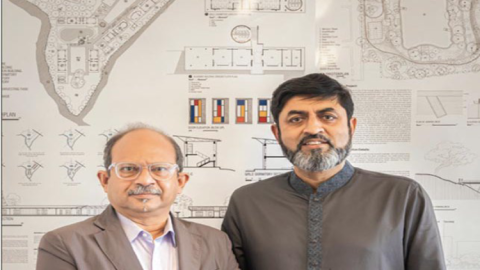
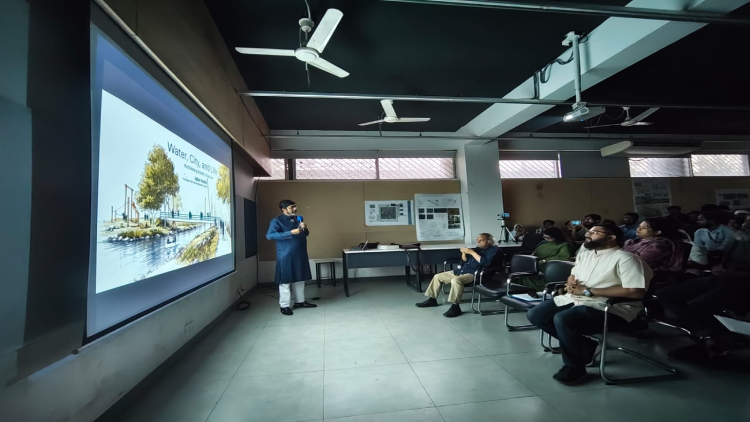
Ar. Iqbal Habib, Adviser, arch.BU

Water has long shaped how settlements in Bangladesh take form, evolve, and adapt. Over time, this relationship has weakened, and in many cities, lakes and canals have receded into the background, often treated as residual spaces or problems to be managed.
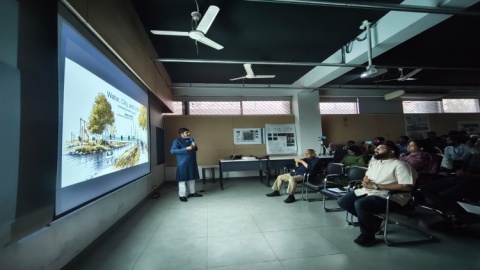
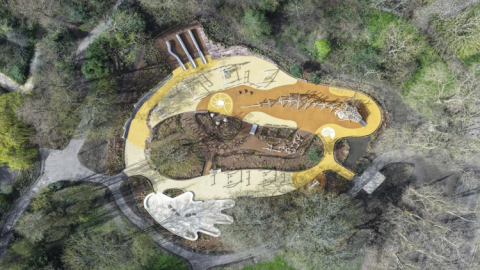
The discussion brings together a series of projects that attempt to restore this connection. Spanning different regions of the country—from Dhanmondi Lake and Hatirjheel in Dhaka to Shakuni Lake in Madaripur, and the Baburail Canal and City Park in Narayanganj—it explores how each site reflects a unique narrative of water, people, and transformation.
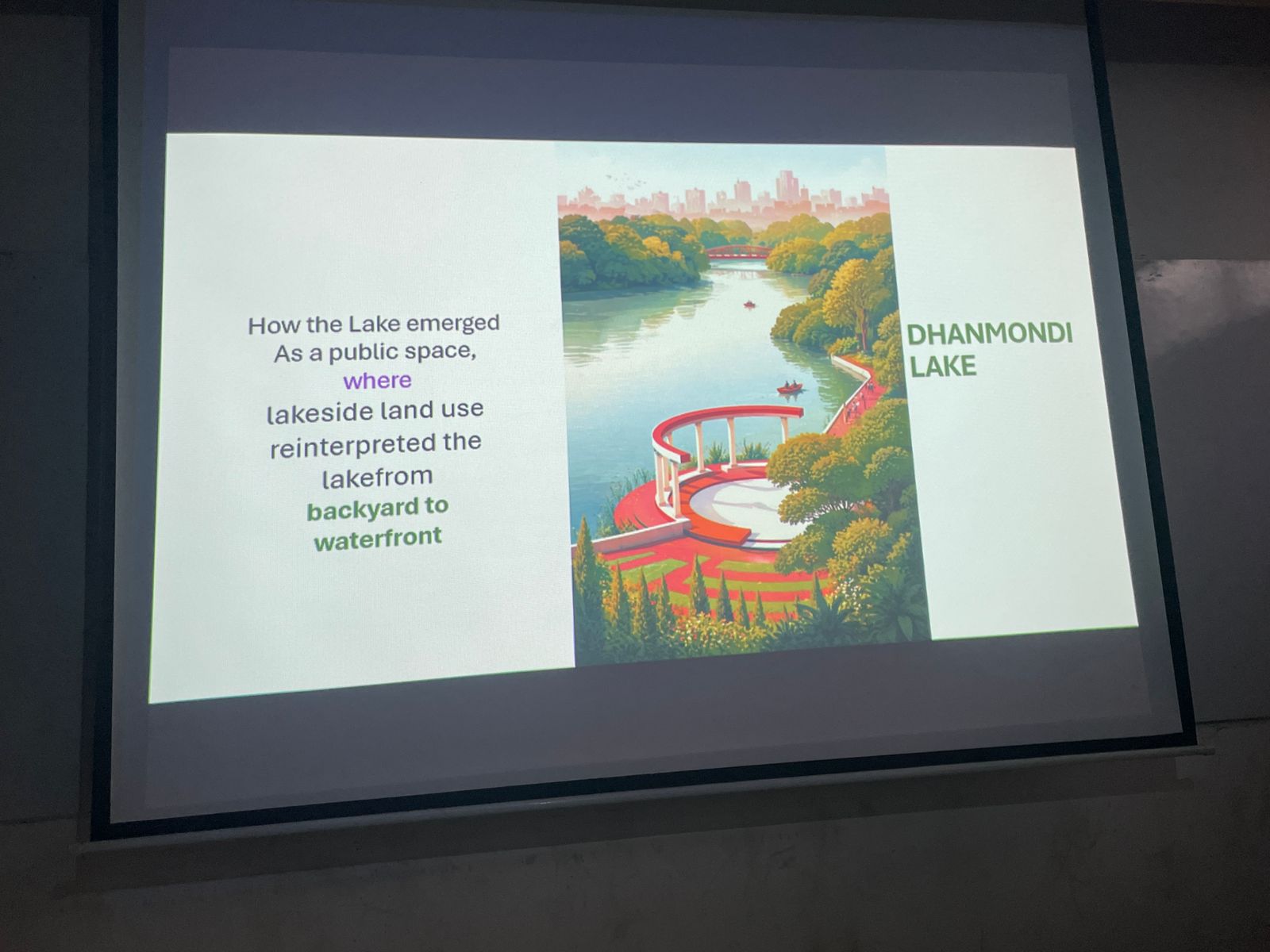
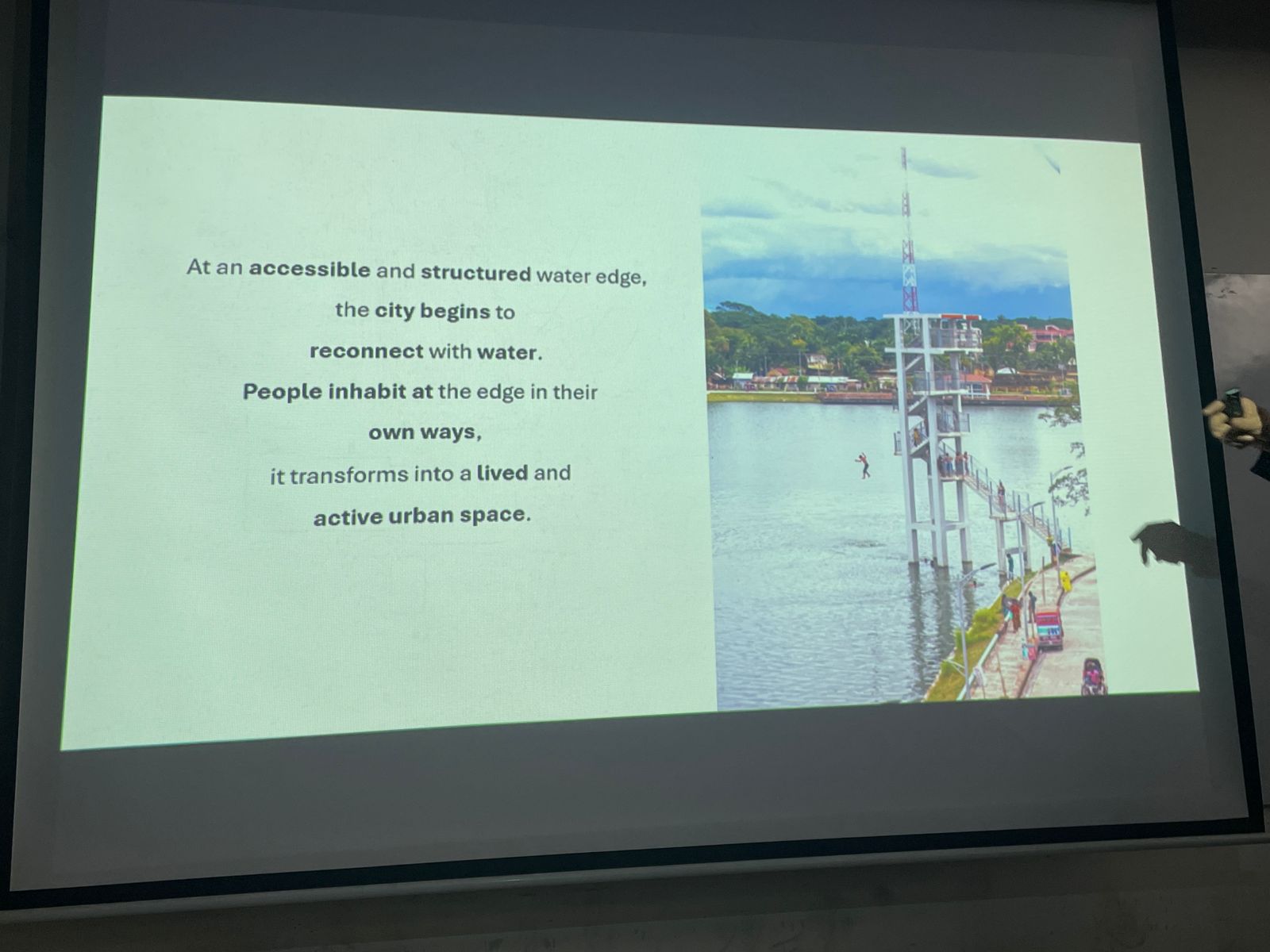

The projects are not presented as completed outcomes. Instead, the talk reads them as evolving processes. Each begins with a specific condition, such as encroachment, pollution, or fragmentation, and progresses through layers of negotiation, design, and time. The result extends beyond the recovery of a waterbody, shaping new relationships between landscape, movement, and public life.
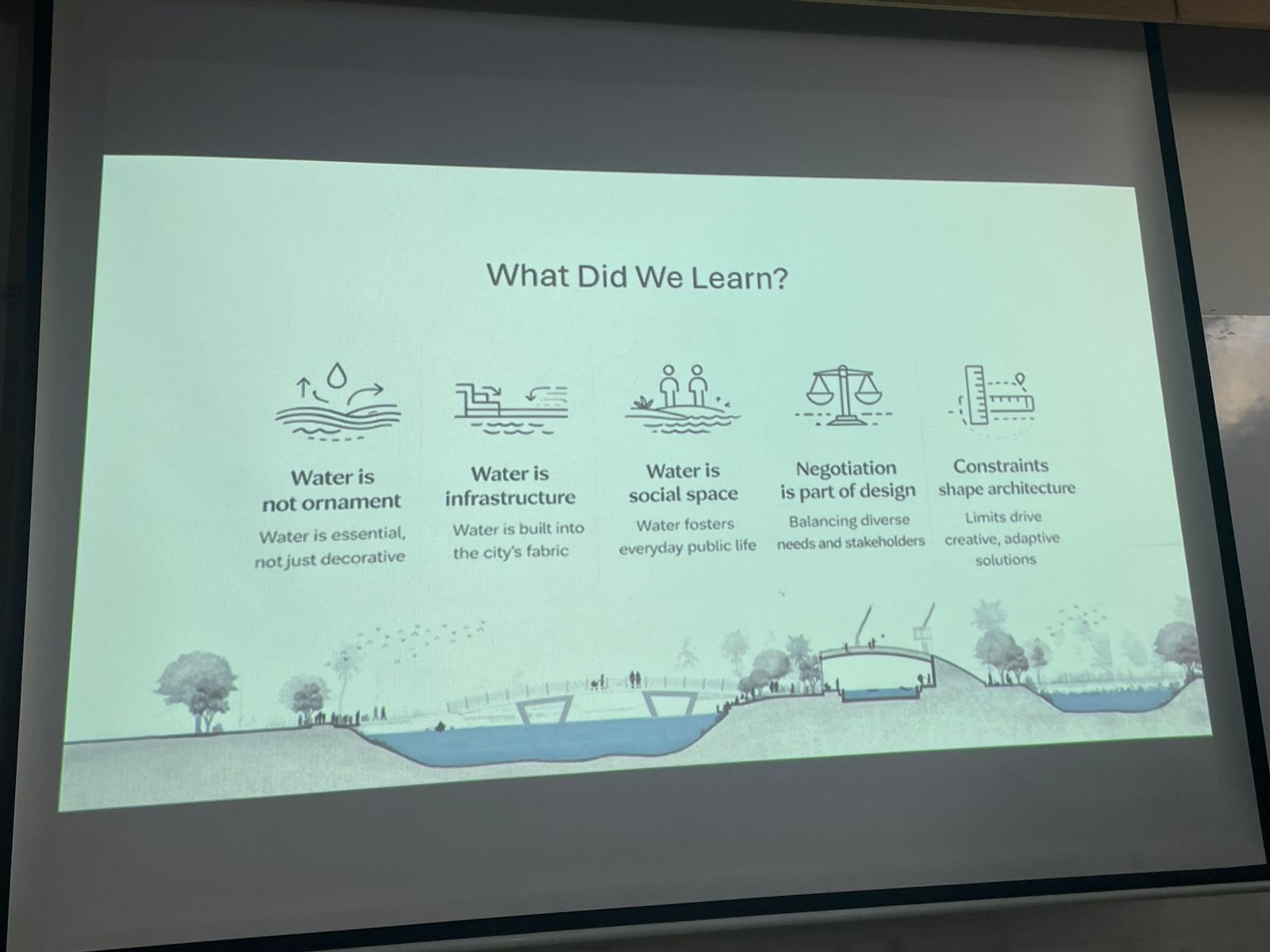
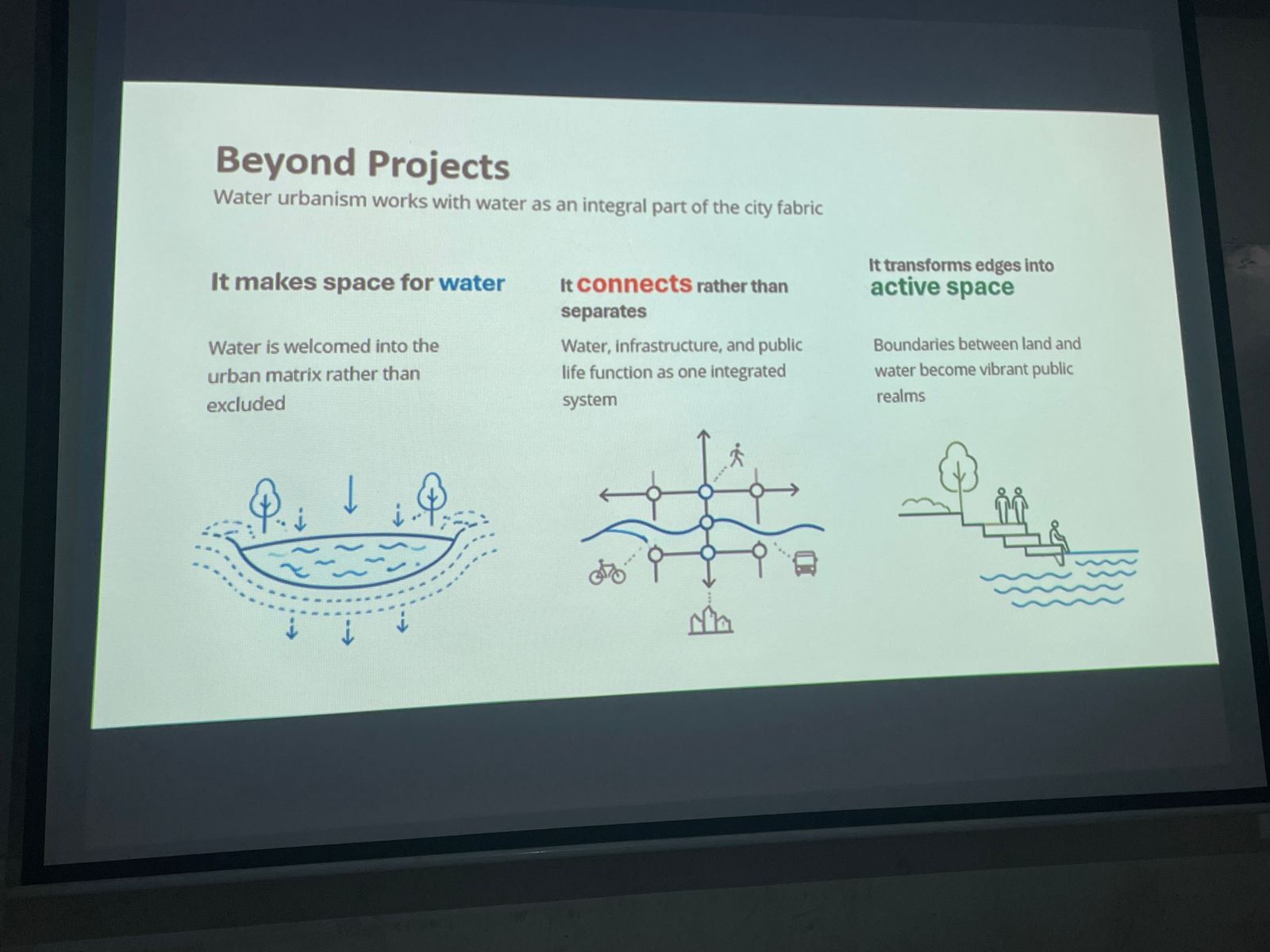
The session considers how water can guide urban form by shaping edges, linking systems, and opening shared spaces within dense and often contested environments. It also addresses the practical realities of working in Bangladesh, where design moves beyond drawings into sustained engagement with institutions, communities, and changing ground conditions.
Through these reflections, the session invites a broader understanding of Water Urbanism as a continuous practice of reconnecting water, city, and landscape.
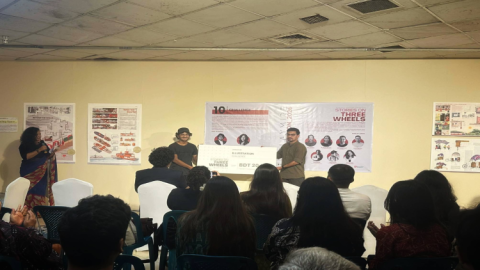
The event was honored by the presence of Professor Shamsul Wares, Dean Professor N. R. Khan, Head Ar. Sheikh Itmam Soud, students, and teachers from the Department of Architecture, Bangladesh University.